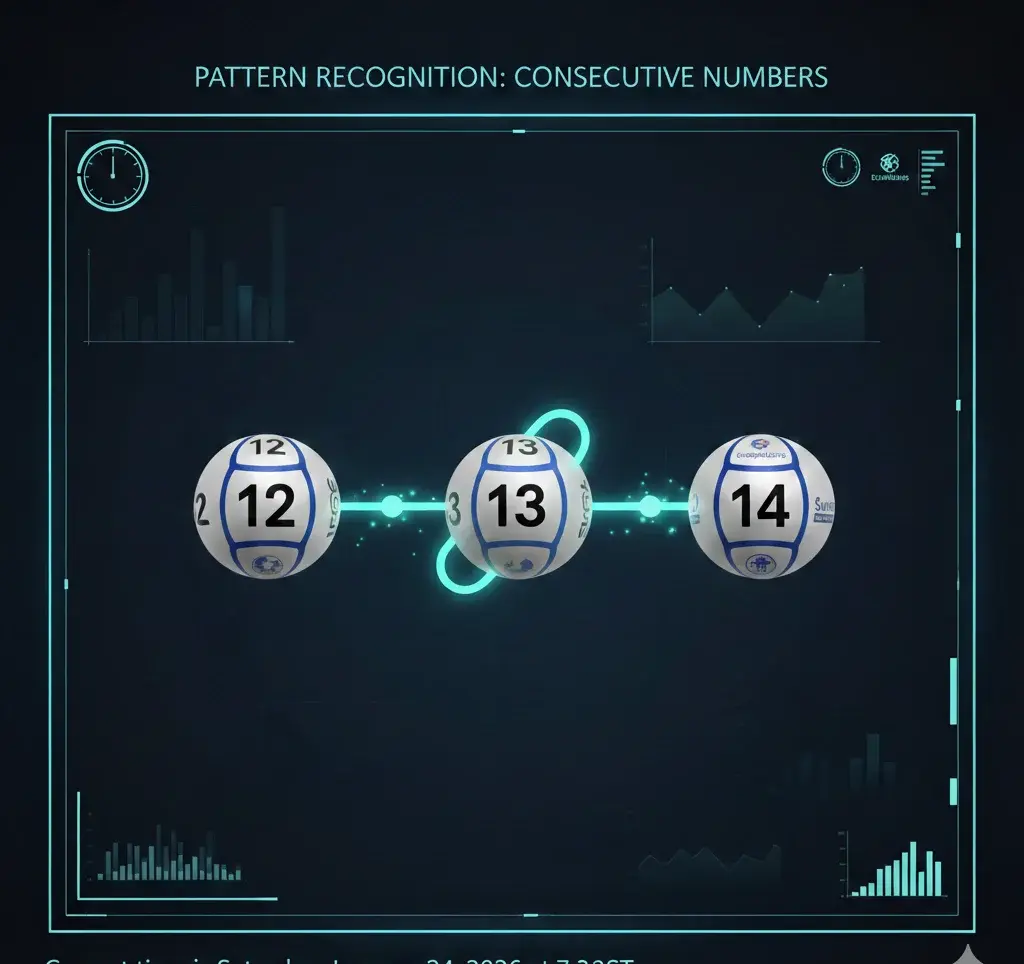
Consecutive Number Patterns in EuroMillions: What the Data Shows
How often do consecutive numbers appear together in EuroMillions?
"I never pick consecutive numbers—that would never win." This common belief leads players to avoid patterns like 12-13-14. But what does the data actually show?
The Reality of Consecutive Numbers
Our analysis of 1,900+ EuroMillions draws reveals that consecutive numbers appear together far more often than most players expect:
EuroMillions Consecutive Pattern Frequency
- • At least one consecutive pair: 47.3% of draws
- • Two consecutive pairs: 8.2% of draws
- • Three or more consecutives: 2.1% of draws
Nearly half of all EuroMillions draws contain at least one consecutive pair. Avoiding consecutive numbers means your selections match winning patterns less than half the time.
Why Players Avoid Consecutives
Consecutive numbers "look" non-random to our pattern-seeking brains. When we see 1-2-3-4-5-6, it feels impossible as a winning combination. But it has exactly the same probability as any other combination—roughly 1 in 14 million for a 6/49 lottery.
Strategic Implications
Don't automatically exclude consecutive pairs from your selections. Including them ensures your picks align with historical winning patterns. For more on EuroMillions patterns, see our EuroMillions analysis page.
DrawSense.ai turns 15,000+ historical draws into number statistics and AI-generated picks. Every draw is random and every ticket has the same chance of winning — play for fun.
Explore the statistics →